
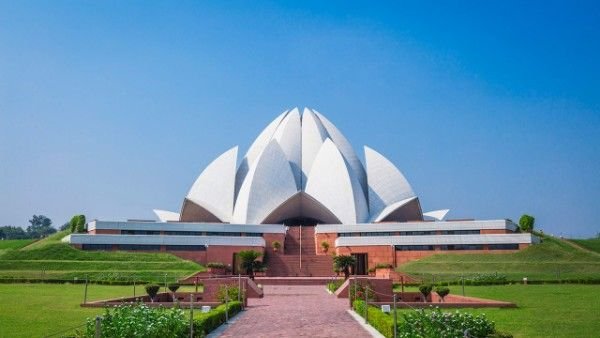
The Lotus Temple in Delhi is one of the most remarkable landmarks in India, admired for its stunning lotus-shaped design and peaceful atmosphere. Officially known as the Bahai Lotus Temple In Delhi, it stands as a symbol of harmony and spiritual unity. It is not just a place of worship but a global center promoting peace, meditation, and universal brotherhood. With its unique structure and serene surroundings, the Lotus Temple in India attracts millions of visitors every year.
History and Origin of the Lotus Temple In Delhi
The Bahai Lotus Temple was completed in 1986 and designed by Iranian architect Fariborz Sahba. This temple belongs to the Bahá’í Faith, a religion that emphasizes the oneness of all humanity and equality among people of all races and religions. The idea behind the temple was to create a place where people of any faith or belief could come to meditate, pray, and find inner peace. The design was inspired by the lotus flower, a symbol of purity that has deep spiritual significance in Indian culture.
The Lotus Temple In Delhi was constructed under the supervision of the Bahá’í community of India and became the seventh Bahá’í House of Worship in the world. Since its opening, it has become a major tourist attraction and a global icon of modern architecture.
Architectural Marvel of Bahai Lotus Temple
The Bahai Lotus Temple India is famous for its extraordinary architecture that resembles a blooming lotus flower. The structure consists of 27 free-standing marble petals, arranged in clusters of three to form nine sides. These nine sides represent the nine major religions of the world, reflecting the Bahá’í belief in the unity of all faiths.
The temple is surrounded by beautiful gardens, pools, and pathways that enhance its charm and tranquility. The white marble used in construction was imported from Greece, giving the building a radiant appearance under sunlight. The interior of the temple can accommodate more than 2,000 people at once and remains silent, allowing visitors to meditate peacefully.
Globally, the Lotus Temple has inspired other similar designs, such as the Lotus Temple Virginia, Golden Lotus Temple, and SV Lotus Temple Fairfax VA, each of which reflects the same message of peace and spirituality.
Significance of the Lotus Design
The lotus flower holds a special place in Indian culture as a symbol of purity, enlightenment, and spiritual growth. By choosing the lotus as its design, the Bahai Lotus Temple New Delhi connects deeply with India’s cultural heritage. Just as a lotus blooms beautifully even in muddy water, it represents the human ability to rise above difficulties and spread positivity.
For the Bahá’í community, the lotus represents the unity of all people and religions. The temple’s open structure welcomes everyone—regardless of caste, creed, gender, or religion—making it a true temple of peace and equality.
Visiting the Lotus Temple In Delhi
Located in Kalkaji, South Delhi, near Nehru Place, the Temple Lotus In Delhi is easily accessible from all parts of the city. Tourists can reach it via the metro, with the Kalkaji Mandir Metro Station being the closest. The temple’s calm environment and modern design make it a must-visit for anyone traveling to Delhi.
Lotus Temple In Delhi Timings
The Lotus Temple Delhi timings are generally from 9:00 AM to 7:00 PM during summer and 9:00 AM to 5:30 PM during winter. The temple remains closed on Mondays. Mornings and evenings are considered the best times to visit, especially for photography and meditation.
Lotus Temple Online Ticket Booking
Entry to the Bahai Lotus Temple India is completely free. However, during busy seasons, visitors can use the Lotus Temple In Delhi online ticket booking option available through the official tourism websites for smoother entry. Photography is allowed in the garden areas but not inside the prayer hall, where silence is strictly maintained. Visitors are requested to remove their shoes before entering the main building.
Bahai Lotus Temple India – Rules and Visitor Etiquette
The Bahai Lotus Temple New Delhi is open to everyone, regardless of religion or background. However, there are a few simple rules to maintain the sanctity of the place. Visitors must remain silent inside the prayer hall, as it is meant for meditation and reflection only. Chanting, rituals, or religious ceremonies of any particular faith are not permitted inside.
The temple’s peaceful surroundings encourage visitors to spend time in contemplation. Dress modestly, respect the silence, and avoid using mobile phones or loud devices within the temple area. These rules help preserve the sacred and calm environment that defines the Bahai Lotus Temple India.
Hotels Near Lotus Temple In Delhi
If you’re planning a visit, there are several hotels near Lotus Temple In Delhi suitable for different budgets. Some popular options include hotels in Nehru Place, Greater Kailash, and East of Kailash. Many of these hotels offer easy transport to the temple and nearby attractions like ISKCON Temple and Nehru Place Market. Staying close to the Lotus Temple at Delhi allows tourists to enjoy a peaceful morning or evening visit without the rush of the city.
Global Lotus Temples and Inspirations
The Lotus Bahai Temple in Delhi has inspired the construction of several other Bahá’í Houses of Worship worldwide. Among them are the Lotus Temple Fairfax VA and SV Lotus Temple Fairfax VA in the United States, which share the same architectural elegance and message of spiritual unity. The design concept of the lotus has also been used in the Golden Lotus Temple, symbolizing purity and divine beauty.
These temples together promote the Bahá’í vision that “the earth is but one country, and mankind its citizens.” The Delhi temple remains the most famous among them, often featured in international architecture journals and travel guides.
Interesting Facts About the Lotus Temple In Delhi
- The Bahai Lotus Temple New Delhi has won numerous architectural awards, including recognition from the Institute of Structural Engineers in the UK.
- It is one of the most visited buildings in the world, attracting over 10 million visitors every year.
- The temple uses solar power for part of its energy needs, showcasing India’s growing focus on sustainability.
- Despite being a modern architectural marvel, it remains deeply connected to traditional Indian values and spirituality.
- The Lotus Temple in India does not have any idols or priests; instead, it promotes personal prayer and meditation as a path to inner peace.
Conclusion
The Lotus Temple stands as a timeless monument to peace, unity, and spiritual reflection. Its breathtaking design, silent halls, and inclusive philosophy make it one of the most visited and respected religious sites in India. Whether you visit as a tourist, an architect, or a seeker of inner peace, the Bahai Lotus Temple In New Delhi leaves every visitor with a sense of calm and inspiration.
Amid the busy life of Delhi, this white marble masterpiece continues to remind humanity of the beauty of unity and the power of peace. Truly, the Lotus Temple in Delhi is more than just a building—it is a living symbol of harmony among all people.

Krishna Mishra writes for Insights of Hinduism, where he shares heartfelt thoughts on festivals, traditions, and the timeless wisdom of Sanatan Dharma. His aim is to keep the essence of Hindu culture alive in a way that feels simple, authentic, and relatable to everyone.