
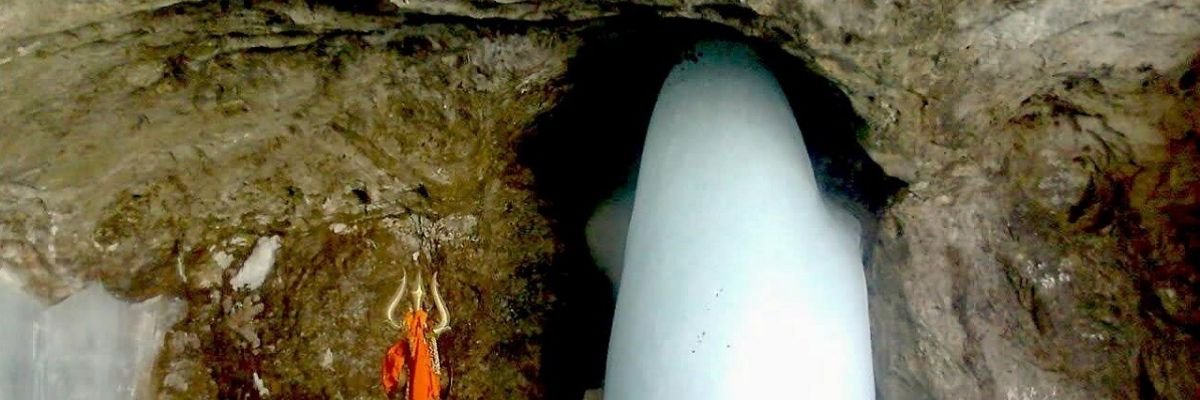
The Amarnath Temple is one of the most sacred pilgrimage destinations in India, located high in the Himalayan mountains of Jammu & Kashmir. Dedicated to Lord Shiva, the temple is famed for its naturally formed Ice Shivling, which emerges every year inside a cave at an altitude of around 3,888 meters. Millions of devotees from across India and abroad undertake the Amarnath Temple Yatra to witness this divine phenomenon, often braving extreme weather conditions and challenging terrains.
For centuries, the temple has been a symbol of faith, devotion, and endurance. Pilgrims, saints, and spiritual seekers journey to this cave not only for religious merit but also for a deeply transformative spiritual experience. Visiting Amarnath Temple is considered a sacred act that brings spiritual fulfillment and connects devotees to the eternal energy of Lord Shiva.
History of Amarnath Temple
The history of the Amarnath cave is deeply intertwined with Hindu mythology, local folklore, and historical references. According to legend, this cave is where Lord Shiva revealed the secret of immortality (Amar Katha) to Goddess Parvati. To ensure that no other being could overhear this secret, Shiva left behind all his companions, including Nandi (the bull), the moon, and his serpent. Only Parvati was allowed to accompany him inside the cave.
It is believed that Shiva created Rudra Agni, a fiery form, to prevent any being from eavesdropping on the Amar Katha. However, legend says that two pigeons overheard the story and became immortal, a symbol that persists to this day near the cave. Many pilgrims claim to have sighted these pigeons during the Yatra, reinforcing the mystical aura of Amarnath.
Historically, the cave was rediscovered by a shepherd named Buta Malik, who was guided by a saint. On revisiting the location, he found the Ice Shivling, further strengthening the sacredness of the site. Ancient texts, including the Rajatarangini, also reference the Amarnath cave and mention that devotees have been making this pilgrimage for centuries.
Spiritual Significance of Amarnath Temple
The Miracle of the Ice Shivling
The Ice Shivling is the primary attraction of the temple. Formed naturally from freezing water droplets that trickle down from the roof of the cave, this Shivling is believed to embody the divine energy of Lord Shiva. Unlike man-made idols, the Ice Shivling grows and shrinks depending on climatic conditions, which devotees interpret as a sign of cosmic balance and Shiva’s presence.
Symbol of Faith and Devotion
The Amarnath Temple Yatra is much more than a physical journey; it is a spiritual endeavor that teaches endurance, patience, and devotion. It symbolizes:
- Surrender to divine power
- Overcoming obstacles through faith
- Spiritual cleansing and self-realization
- Connection with nature and the elements
Devotees believe that visiting the Amarnath cave helps remove sins, purify the soul, and bring inner peace.
Amarnath Yatra 2025: Dates, Registration & Essential Information
The Amarnath Temple Yatra generally starts in late June or early July, coinciding with the holy Hindu month of Shravan, and concludes in August on Raksha Bandhan. The Shri Amarnath Shrine Board (SASB) announces official dates every year.
Registration Process
Pilgrims must follow strict procedures to participate in the Yatra:
- Complete mandatory medical fitness tests
- Submit valid ID proof such as Aadhaar
- Register online or offline
- Carry the Yatra Permit during the entire pilgrimage
Only pilgrims deemed medically fit are allowed, given the high altitude and physical demands of the trek.
Age and Health Restrictions
- Children below 13 years
- Adults above 70 years
- Pregnant women (over five months)
are not permitted to undertake the Yatra to ensure safety.
Amarnath Temple Yatra Routes
There are two main trekking routes and one helicopter route for the pilgrimage.
1. Pahalgam Route (Traditional Route)
- Distance: 36–48 km
- Duration: 3–5 days
- Key Stops: Chandanwari, Pissu Top, Sheshnag, Panchtarni
- Difficulty: Moderate
The Pahalgam route is scenic and offers a gradual climb through rivers, valleys, and lush forests. It is ideal for families and first-time pilgrims seeking a traditional trekking experience.
2. Baltal Route (Shorter Route)
- Distance: 14–16 km
- Duration: 1–2 days
- Difficulty: Steep and challenging
The Baltal route is shorter but involves difficult climbs and narrow paths. It is suitable for experienced or physically fit pilgrims seeking quicker access to the cave.
3. Helicopter Route
Helicopter services are available from Pahalgam and Baltal to Panchtarni. From there, pilgrims walk 5–6 km or use pony rides to reach the cave. Helicopters offer a safer and faster alternative, especially for elderly or medically fit but physically challenged devotees.
How to Reach Amarnath Temple
By Air
- Nearest airport: Srinagar International Airport
- Distance to Pahalgam: ~90 km
- Distance to Baltal: ~95 km
- Taxis and buses connect the airport to the Yatra starting points.
By Train
- Nearest railway station: Jammu Tawi
- Well-connected to major cities across India.
By Road
- Regular bus and taxi services link Jammu, Srinagar, Pahalgam, and Baltal.
- Trekking begins from these base points.
Rituals Performed at Amarnath Temple
Darshan of the Ice Shivling
Pilgrims enter the cave barefoot and chant “Har Har Mahadev” as they approach the Shivling. The serene atmosphere inside the cave enhances the spiritual experience.
Offerings
Common offerings include:
- Bilva leaves
- Flowers
- Holy water
- Ghee
- Prayers for peace and protection
Chhari Mubarak Procession
The sacred mace (Chhari) of Lord Shiva is carried in a ceremonial procession. This ritual signifies the spiritual completion of the Yatra and is one of the most important events during the pilgrimage.
Accommodation & Food Facilities
Accommodation
Pilgrims can stay in:
- Government-run huts
- Tented camps
- Private lodges
- Pilgrim shelters
- Temporary base camps at Panchtarni, Sheshnag, and Baltal
Food & Langars
Numerous langars (community kitchens) provide free meals, snacks, and tea. Volunteers from across India manage these facilities, serving devotees with dedication and hospitality.
Weather Conditions & Safety
Weather
The region experiences unpredictable weather, often shifting from sunshine to rain or snowfall in minutes. Night temperatures can drop below 0°C.
Safety Tips
- Keep the Yatra Permit secure
- Wear warm, layered clothing
- Carry raincoats and waterproof bags
- Stay hydrated
- Walk slowly to avoid altitude sickness
- Follow all official guidelines
- Avoid plastic and keep the environment clean
- Utilize medical camps for emergencies
Best Time to Visit
The official Yatra period is from June to August. Visiting outside these months is not allowed due to heavy snow and dangerous conditions. Early days of the Yatra are ideal for smoother trekking and pleasant weather.
Nearby Attractions
Pahalgam
- Lush meadows, pine forests, and rivers
- Famous for Aru Valley and Betaab Valley
Sonmarg
- High-altitude destination
- Famous for Thajiwas Glacier and beautiful landscapes
Srinagar
- Dal Lake, Shankaracharya Temple, Mughal Gardens, and Hazratbal Shrine
Cultural and Moral Importance of the Yatra
The Amarnath Yatra is a journey of endurance, faith, and spiritual awakening. Trekking through challenging mountains, icy winds, and rugged trails teaches resilience, devotion, and humility. For many, reaching the cave is more than a pilgrimage—it is a once-in-a-lifetime spiritual achievement.
FAQs About Amarnath Temple
1. Why is Amarnath Temple famous?
It is famous for the naturally formed Ice Shivling representing Lord Shiva.
2. How difficult is the Yatra?
The trek is moderate to difficult, depending on the chosen route.
3. Are helicopter services safe?
Yes, helicopter services are regulated and operated by approved providers.
4. When does the Ice Shivling form?
It forms naturally during summer as water freezes inside the cave.
5. Can senior citizens undertake the Yatra?
Yes, but only after passing a medical fitness test.
Conclusion
The Amarnath Temple is not merely a pilgrimage site—it is a spiritual journey connecting devotees to the divine presence of Lord Shiva. With its rich history, mystical Ice Shivling, and breathtaking Himalayan surroundings, it continues to inspire millions of pilgrims every year. Whether trekking through serene valleys, steep paths, or flying via helicopter, the experience of visiting the Amarnath Cave leaves devotees with lasting spiritual memories, inner peace, and a sense of divine fulfillment.

Krishna Mishra writes for Insights of Hinduism, where he shares heartfelt thoughts on festivals, traditions, and the timeless wisdom of Sanatan Dharma. His aim is to keep the essence of Hindu culture alive in a way that feels simple, authentic, and relatable to everyone.