
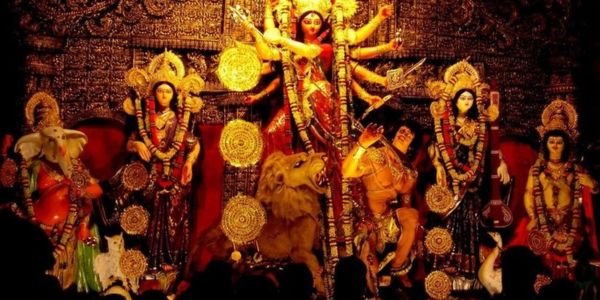
Durga Ashtami is one of the most powerful and spiritually significant days in Hindu tradition. Celebrated on the eighth day of Navratri, this auspicious occasion honors Goddess Durga and her divine strength, courage, and victory over evil. Across India, Durga Ashtami is observed with immense devotion, rituals, fasting, prayers, and cultural festivities.
This detailed guide explains the significance, history, rituals, fasting rules, puja vidhi, traditions, and why Durga Puja Ashtami holds such a special place in Hindu culture.
What is Durga Ashtami? – Meaning & Importance
Durga Ashtami marks the eighth tithi of Navratri, when devotees worship the fierce and protective form of Goddess Durga. This day is also known as Maha Ashtami, believed to be the moment when the goddess destroyed the demon Mahishasura, symbolizing the victory of good over evil.
The significance of Durga Ashtami is deeply rooted in spiritual awakening, purity, inner strength, and devotion. Millions of devotees across India observe fasts, perform rituals, and visit temples to seek blessings for courage, health, and prosperity.
Why Durga Ashtami is Important
- Represents the triumph of divine power over negativity
- Honors the Shakti (energy) embodied by Goddess Durga
- A powerful day for spiritual cleansing and prayer
- Special rituals like Kanya Puja bring prosperity and blessings
- A crucial day during Durga Puja celebrations, especially in Bengal
History & Mythology of Durga Ashtami
The story behind Durga Ashtami is linked to the legendary battle between Goddess Durga and the demon king Mahishasura. According to Hindu scriptures, Mahishasura received a boon that no man or god could kill him. Filled with arrogance, he started creating havoc in the universe.
To end his cruelty, the divine trinity—Brahma, Vishnu, and Mahesh—combined their energies to create Goddess Durga. On the day of Ashtami Vrat, the goddess fought the fiercest battle and finally destroyed Mahishasura.
Thus, Durga Ashtami became the symbol of ultimate feminine power, righteousness, and cosmic balance.
Rituals Performed on Durga Ashtami
Morning Rituals (Mahasnan & Sankalp)
Devotees begin the day with a purifying bath and take a vow (sankalp) to worship Goddess Durga with devotion.
Durga Ashtami Puja
The puja includes lighting a lamp, offering flowers, fruits, incense, and reciting Durga Stotra, Durga Chalisa, and sacred mantras. Red flowers and kumkum are especially important.
Kanya Puja (Kumari Puja)
One of the most important rituals of Ashtami Vrat is Kanya Puja, where young girls (aged 2–9) are worshipped as living forms of Goddess Durga.
They are offered:
- Food (poori, halwa, black chana)
- Gifts
- Red chunri
- Blessings
Sandhi Puja
In some regions, Ashtami Vrat overlaps with the sacred Sandhi Kaal, the moment when Ashtami ends and Navami begins, considered extremely powerful.
Havan (Sacred Fire Ritual)
Devotees perform a holy fire ritual offering ghee and herbs into the fire while chanting mantras to purify the surroundings and mind.
Traditional Bhog Offering
Devotees prepare a special bhog (prasad) for Goddess Durga, which includes:
- Poori
- Halwa
- Pumpkin sabzi
- Coconut
- Fruits
Step-by-Step Durga Ashtami Puja Vidhi
Follow this simple Ashtami Vrat puja procedure for maximum spiritual benefits:
- Clean the house early in the morning and bathe.
- Place a clean red cloth on the altar and install Goddess Durga’s idol or picture.
- Light a diya and incense sticks.
- Offer red flowers, rice, kumkum, sandalwood, fruits, and sweets.
- Chant Durga mantras and recite Durga Chalisa.
- Perform Kanya Puja by washing the feet of young girls and offering food and gifts.
- Conduct havan in the evening for purification.
- End the puja with an aarti and distribute prasad.
Powerful Mantras for Durga Ashtami
Durga Beej Mantra
“ॐ दुं दुर्गायै नमः”
Om Dum Durgaye Namaha.
Navarna Mantra
“ॐ ऐं ह्रीं क्लीं चामुण्डायै विच्चे”
Mahishasura Mardini Stotra
Devotees chant this during Ashtami Vrat to seek protection and strength.
Durga Ashtami Fasting Rules
Fasting on Durga Ashtami is believed to remove negativity and bring peace and success.
Rules include:
- Begin the fast after morning prayers
- Avoid grains (for Nirjala or strict fast)
- Fruits, milk, dry fruits, sabudana, and kuttu flour are allowed
- Avoid onion and garlic
- Break the fast after evening aarti or after Kanya Puja
Women observing the Ashtami Vrat fast believe it brings good health, harmony, and blessings for the family.
How Durga Ashtami is Celebrated Across India
West Bengal
Durga Puja reaches its peak on Shakti Ashtami, with grand pandals, dhak beats, sindoor rituals, and cultural events.
North India
People observe Ashtami fasts, perform Kanya Puja, and visit temples.
South India
Special homams, temple processions, and community celebrations mark the day.
Gujarat
Navratri celebrations include special Garba and Dandiya nights dedicated to Durga Ashtami.
Durga Ashtami Muhurat (Tithi & Timings)
The timings for Shakti Ashtami may vary each year based on the lunar calendar. Devotees check the Panchang to perform rituals during the auspicious period.
The Ashtami Tithi usually lasts between sunrise and sunset, followed by Sandhi Puja in many regions.
Spiritual Benefits of Durga Ashtami
Observing Shakti Ashtami brings several spiritual and material benefits:
- Removes obstacles and negative energies
- Enhances courage, strength, and self-confidence
- Brings harmony and success in personal life
- Improves mental peace and clarity
- Attracts prosperity and divine protection
- Helps devotees deepen their spiritual connection
Believers consider Shakti Ashtami one of the most powerful days for prayers, meditation, and intention-setting.
Cultural Importance of Durga Ashtami
Beyond religion, Shakti Ashtami is a celebration of:
- Womanhood
- Feminine strength
- Social unity
- Indian cultural heritage
- Community gatherings
- Music, dance, and traditional art
It symbolizes the respect and honor given to divine feminine power in Indian culture.
Modern Relevance of Durga Ashtami
Even in modern times, Shakti Ashtami inspires people to:
- Fight challenges bravely
- Stay grounded and spiritually connected
- Uplift women and girl children
- Value purity, devotion, and righteousness
The festival is not just about rituals but about embracing the courage and compassion that Goddess Durga represents.
Conclusion
Shakti Ashtami is a deeply spiritual, culturally rich, and powerful festival that honors Goddess Durga’s divine strength and blessings. It reminds us that light always triumphs over darkness, and righteousness always overcomes negativity.
By observing fasts, performing rituals, and engaging in prayers, devotees invite peace, prosperity, and divine grace into their lives. Whether celebrated through grand pandals or simple home puja, Durga Ashtami remains a timeless reminder of the eternal power of the Goddess.
Faq
1.What is Durga Ashtami?
Durga Ashtami is the eighth day of Navratri dedicated to worshipping Goddess Durga in her fierce and powerful form. It symbolizes the victory of good over evil.
2. When is Durga Ashtami celebrated?
Shakti Ashtami is celebrated on the eighth lunar day (Ashtami tithi) of the Navratri festival, usually in the Hindu month of Ashwin (September–October) or Kartik (October–November), depending on the lunar calendar.
3. Why is Durga Ashtami important?
This day marks the moment when Goddess Durga defeated the demon Mahishasura. It is considered highly auspicious for spiritual growth, courage, and protection from negative energies.
4. How is Durga Ashtami celebrated?
Devotees observe fasts, perform Durga Puja Ashtami, offer flowers, fruits, and sweets, chant mantras, perform Kanya Puja, and participate in cultural events such as dances, music, and temple celebrations.
5. What are the rituals of Durga Ashtami?
Rituals include:
- Morning bath and Sankalp
- Durga Puja Ashtami with flowers, kumkum, and incense
- Kanya Puja (worship of young girls as Goddess)
- Havan (sacred fire ritual)
- Offering bhog and prasad
6. What is Kanya Puja?
Kanya Puja is a special ritual performed on Durga Puja Ashtami where young girls (aged 2–9) are worshipped as living forms of Goddess Durga. They are given gifts, food, and blessings.
7. Can I fast on Durga Ashtami?
Yes, fasting is common on Durga Ashtami. Devotees can observe a Nirjala fast or consume fruits, milk, dry fruits, and sabudana. Breaking the fast is done after evening puja.
Krishna Mishra writes for Insights of Hinduism, where he shares heartfelt thoughts on festivals, traditions, and the timeless wisdom of Sanatan Dharma. His aim is to keep the essence of Hindu culture alive in a way that feels simple, authentic, and relatable to everyone.